The technique of modifying ingredients and recipes to create a variety of flavors is something that bakery and cafe owners should know. Sometimes, many people go to study baking, but when they want to modify the dessert they learned to create the desired flavors, they end up using the wrong ingredients.
When making green tea cream as a filling for desserts, some people prefer to buy ready-made ones that are already available on the market for convenience. However, the flavor, intensity, and color of the green tea may not be as intended.
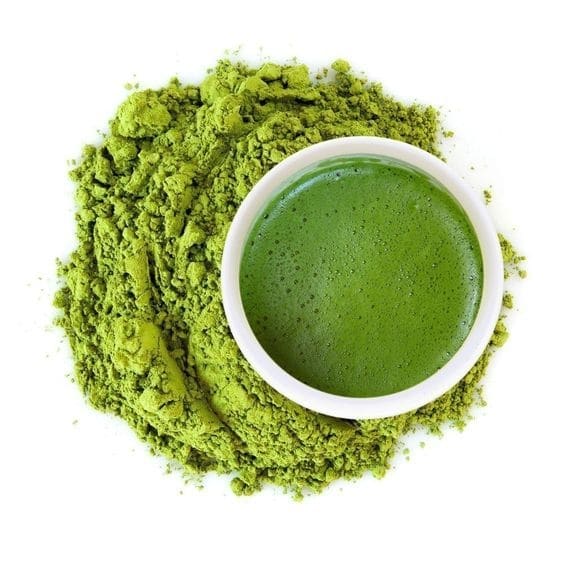
Matchazuki would like to share how to make green tea cream easily. If you are a Hojicha tea lover, you can replace the green tea powder in the recipe with Hojicha tea powder in the same amount. However, I recommend using green tea powder for desserts because it is delicious, has a beautiful color, and has a better taste than using tea leaves.
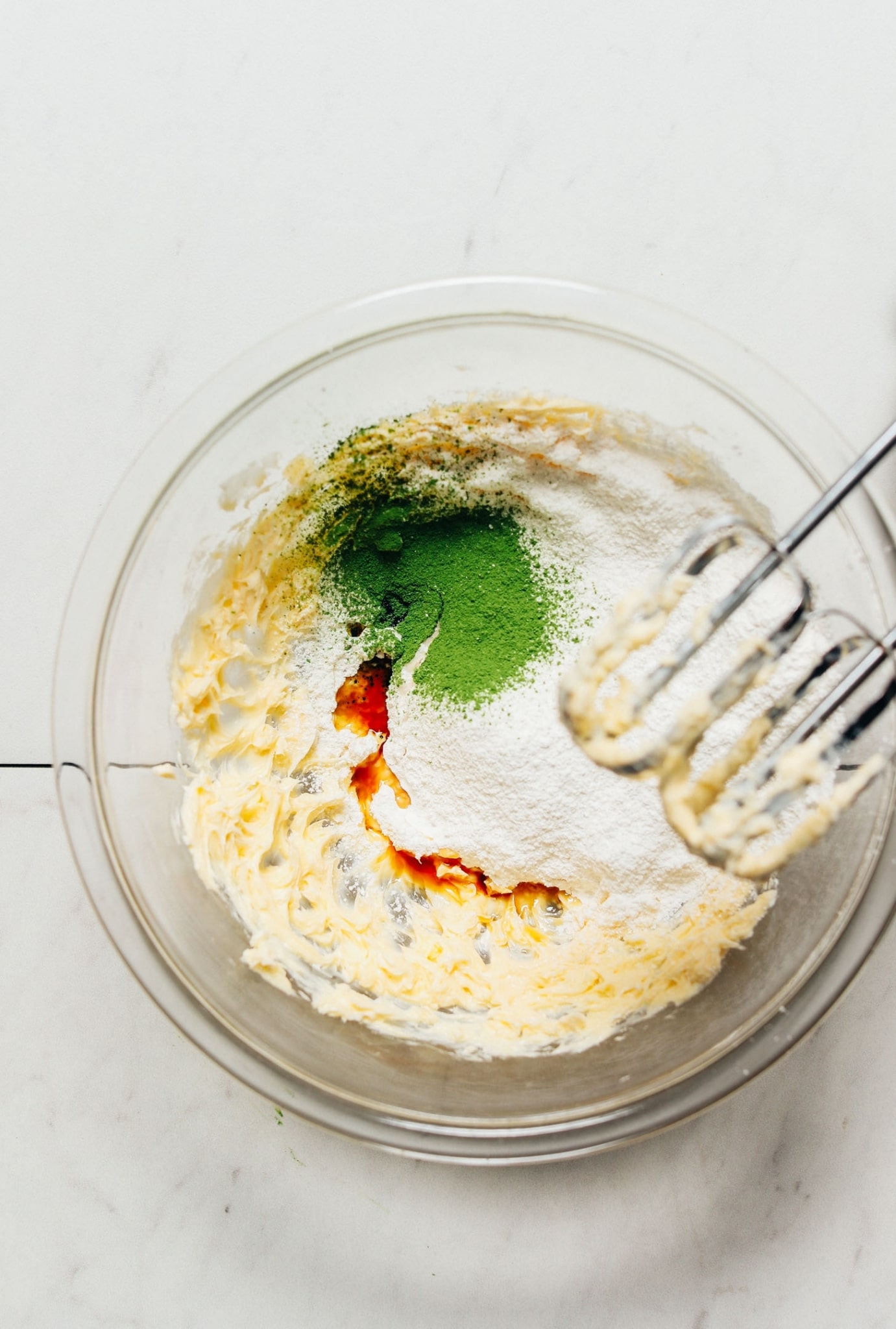
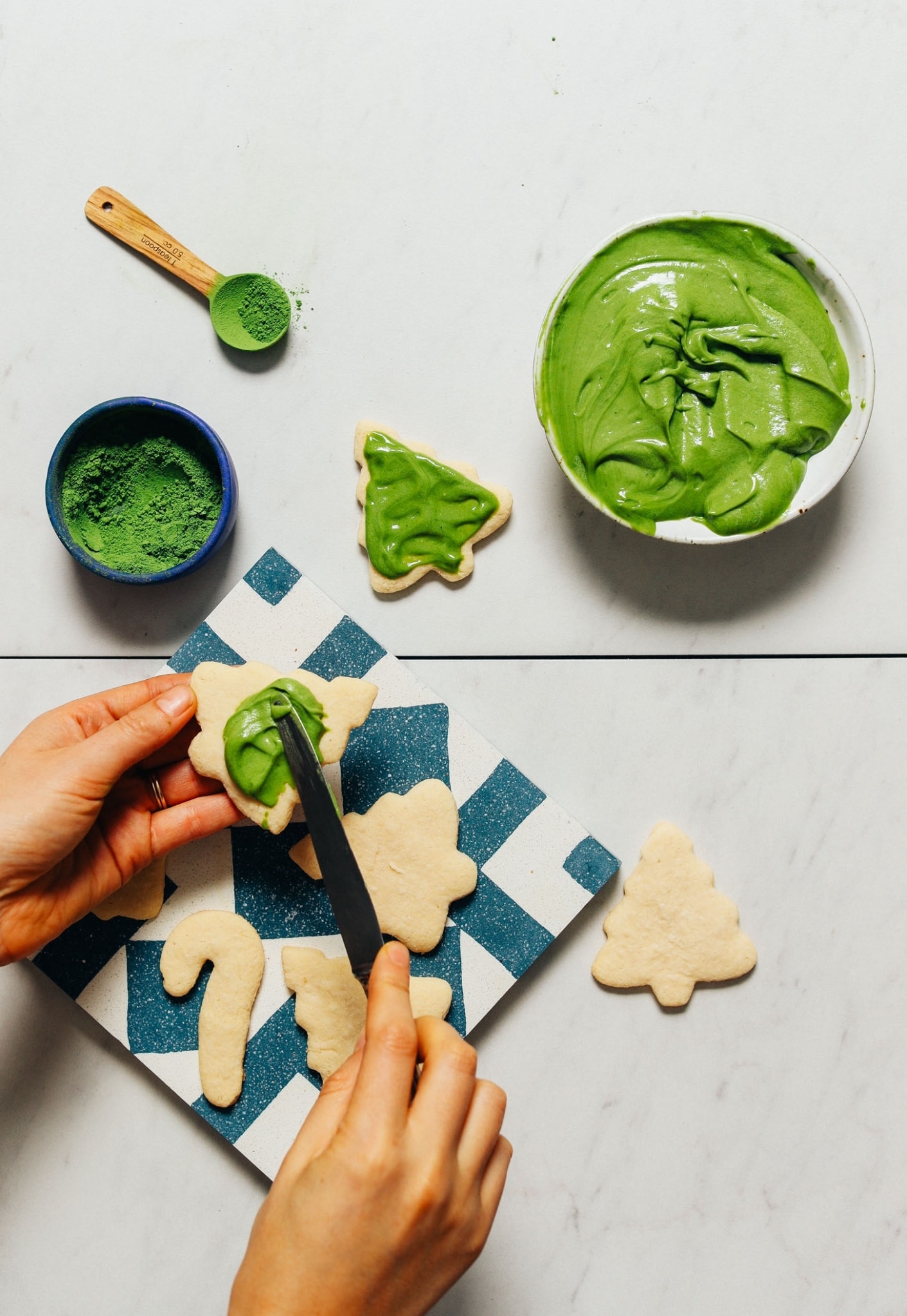
If you’d like to try making your own matcha custard filling, it’s easy to make. Simply heat 125 ml. of milk in a saucepan until lukewarm (not boiling). If steam rises, turn off the heat. Then, beat 1 egg yolk with 35 g. of sugar until pale yellow. Sift 13 g. of cake flour and 1/2 teaspoon of 5 g. of matcha powder into the mixture and continue beating. Gradually pour the warm milk into the saucepan. Heat over low heat, stirring constantly with a spatula until the cream begins to thicken. If you see bubbles rising, heat for another minute and turn off the heat. Then, add the butter and stir until melted. Pour the cream into a flat plate, cover with plastic wrap, and refrigerate for about an hour. This type of cream has a thick texture similar to that found in cream-filled buns, making it perfect for filling bread or pies.
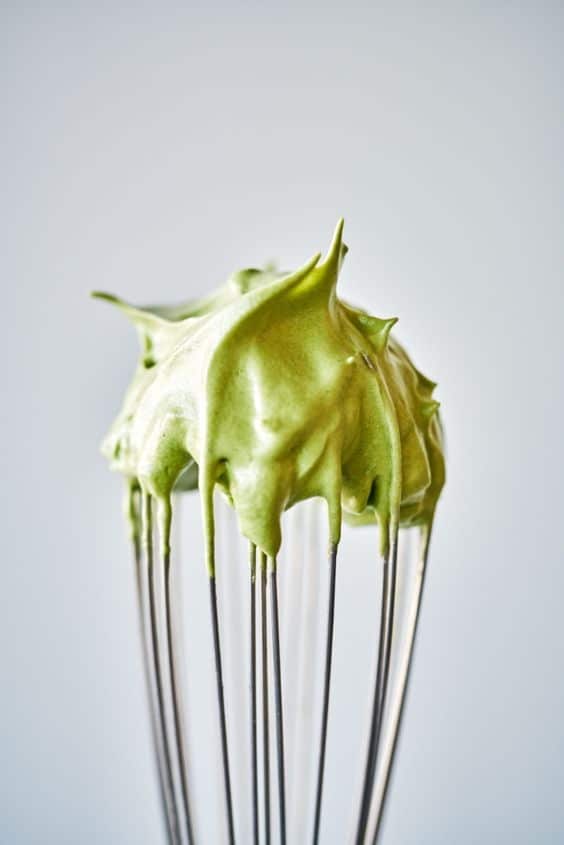
But if it’s green tea cream, the texture is soft and smooth. It can be used as a filling for cakes like crepe cakes, cream puffs, or roll cakes. This type of filling has a light, soft, and smooth texture. You can eat it continuously without it being heavy or greasy because it’s made from just 3 simple ingredients: 400 ml. whipping cream, 1/3 cup of green tea powder, and 1/3 cup of sugar. Mix them together and beat with a whisk until soft peaks form. You can tell when soft peaks form by stopping the whipping and lifting the whisk. The cream at the tip of the whisk will bend down slightly. This type of cream is soft and smooth. It’s often used in Japanese-style bakery products. However, if you beat it for too long, our soft green tea cream filling will turn into a heavy cream that can be used to spread around the cake for decoration or to squeeze the cream into various patterns.
Or if it’s green tea spray to eat with bread, just mix 12 g green tea powder, 50 ml fresh milk, 150 ml fresh milk, 100 ml whipping cream, 40 g sugar together in a pot. Simmer over low heat for 15 minutes. You’ll notice that the mixture will reduce by 50% and become thicker.
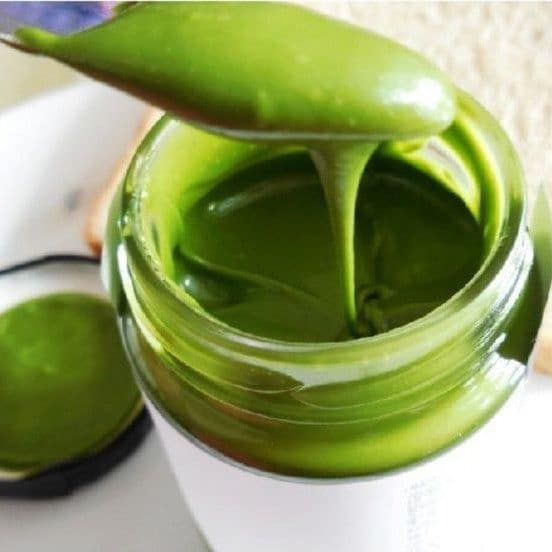
But if you want matcha lava filling, start by mixing 1 ½ teaspoons of gelatin powder with 2 tablespoons of water. Stir well and set aside. Then beat 2 eggs, ½ cup sugar, and 4 tablespoons of cornstarch together and set aside. Put 2 cups of milk, 1 cup of whipping cream, ¼ cup of matcha powder, and ½ teaspoon of salt in a saucepan over low heat. Use a whisk to mix until the matcha powder dissolves well. Then pour in the egg mixture and stir until the mixture thickens. Once the milk mixture thickens, turn off the heat. Then add the prepared gelatin and butter and stir to combine. Place in the refrigerator until cool. Then put it on bread, steamed buns, or any other desserts that you want to make into lava. This one has a lava filling because it uses butter in the filling. When you reheat it and cut the dessert, it will have a flowing lava texture.
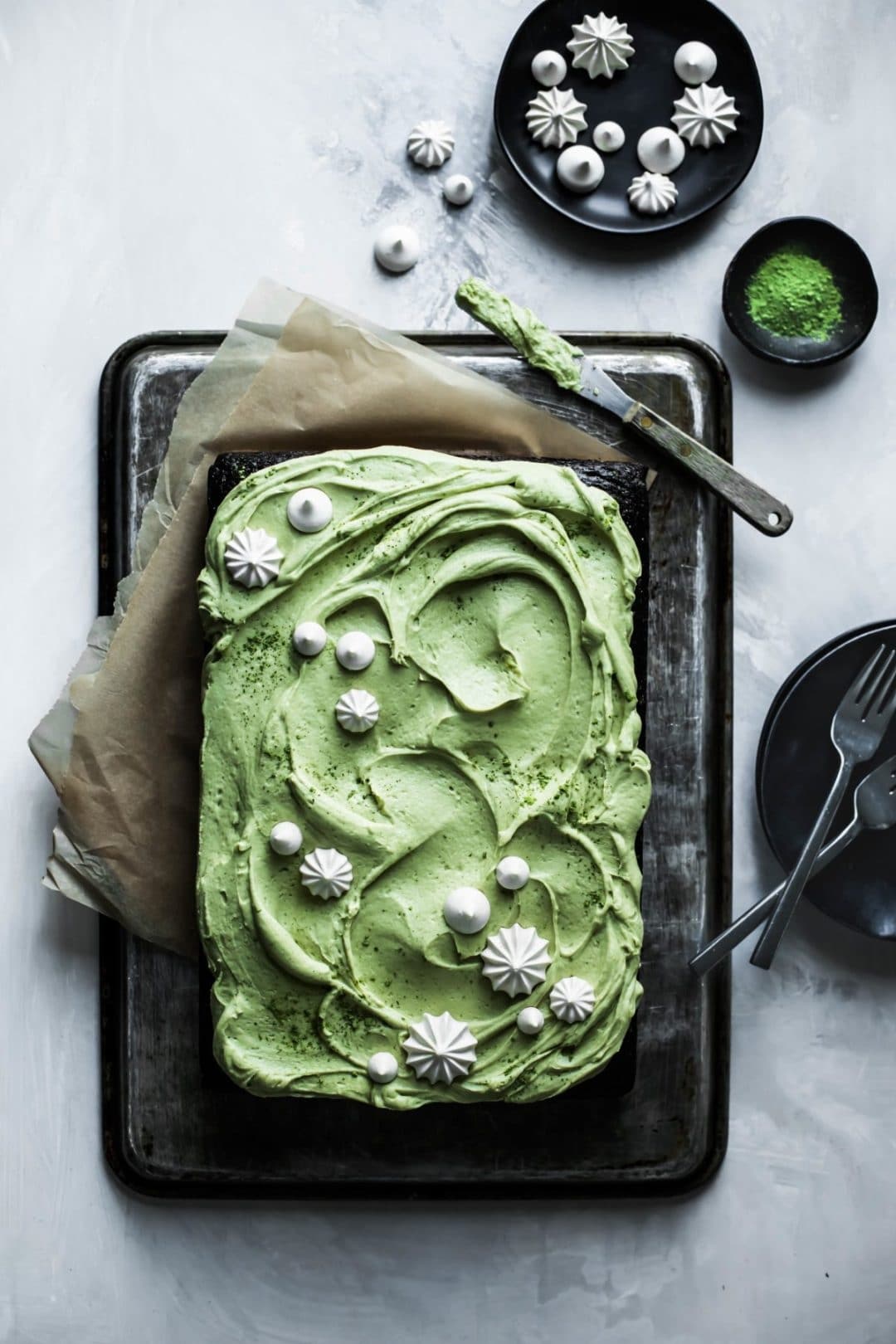
If you have other dessert recipes you’d like to make with matcha flavor but aren’t sure where to start, such as with a chocolate filling, you can simply replace the same amount of cocoa powder with matcha powder. For a richer, more vibrant color, try adding 2-5 grams of matcha powder at a time to avoid overpowering the bitterness. If you’re allergic to cow’s milk, you can also replace soy milk with cow’s milk. Now, you can easily adapt and create a variety of desserts to please MATCHA lovers, without relying on pre-made fillings that may contain preservatives or artificial flavorings, or using artificial green coloring instead of pure matcha powder. 🙂
Source
https://www.proportionalplate.com/dalgona-matcha-latte/
http://www.matcha.my/Blog/matcha-milk-jam-recipe
https://www.oliveandartisan.com/ Making dessert fillings from Matcha powder
https://minimalistbaker.com/vegan-matcha-buttercream-frosting-1-bowl/
Article from: Fuwafuwa