Normally, green tea used in baking can be either leaf or powdered. If using leaf, it must be brewed in hot water and the tea leaves filtered out before use. Therefore, we prefer to use powder because it has a wider range of uses. It can be used dry or brewed and then used in liquid form. Many people who choose to use powder to make desserts still have problems with decorating the desserts not turning out as expected.
Sprinkling matcha powder on the cake and it seeps into the cake is a normal occurrence because the tea powder will absorb moisture and become wet when left for a long time. Therefore, the color may not be smooth.
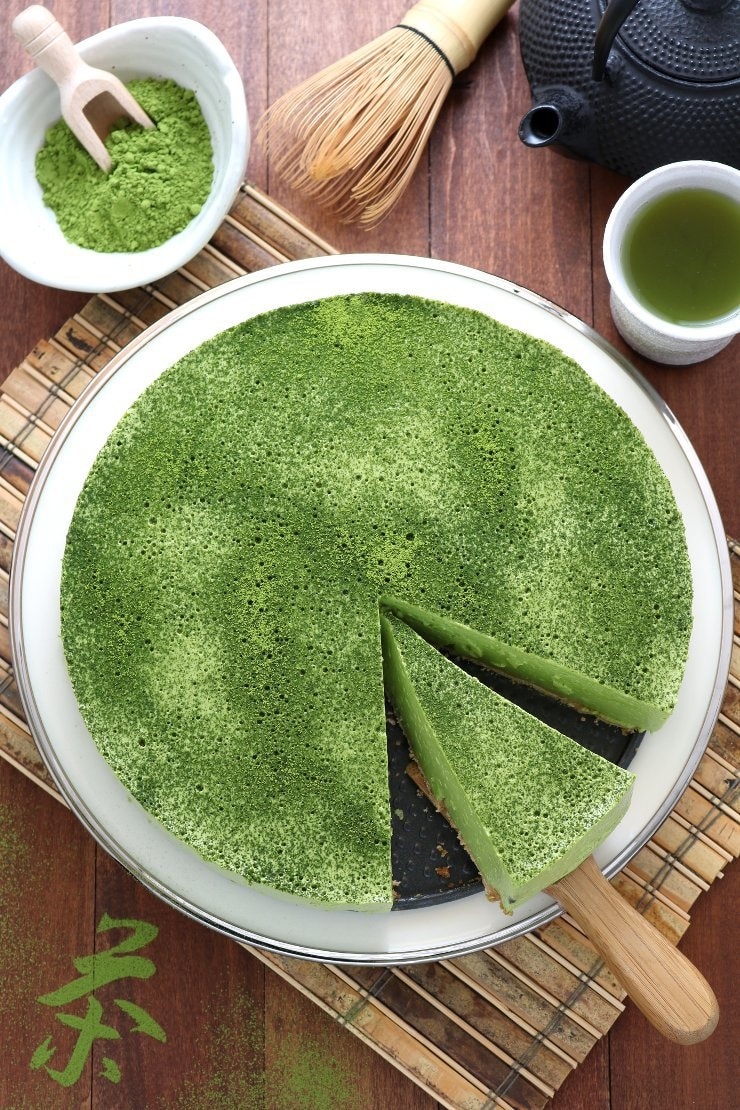
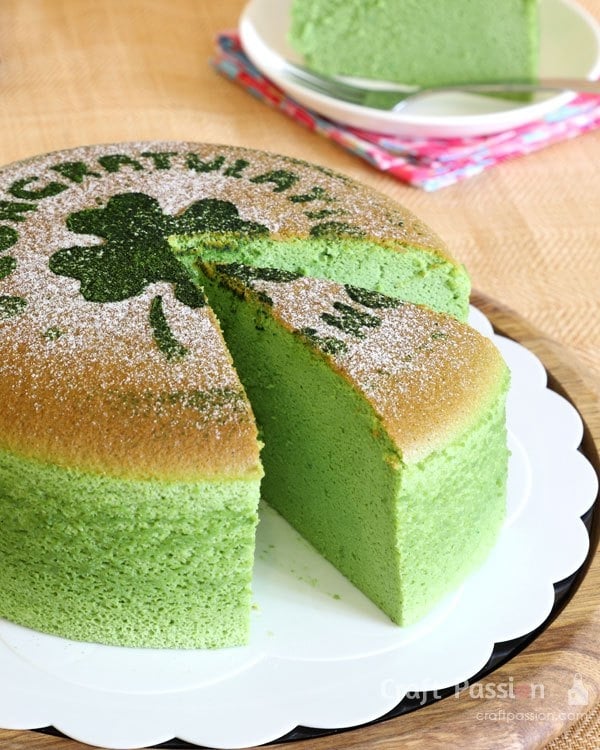
A little trick for decorating desserts is to sprinkle it on when you’re ready to serve or close to the time you’ll eat it to keep the green color uniform. It’s also recommended to sprinkle it on before you serve it with matcha powder. Leave the cake in the refrigerator without covering it. Let the cake dry for about 2 hours. This will make the matcha powder stick more easily and prevent it from melting and seeping into the surface. Or if you want to decorate the cake with patterns, after removing the cake from the refrigerator, place a sheet of paper over the cake without pressing it down. Then sprinkle the matcha powder through a fine sieve along the lined lines (this step must be done quickly).
However, some people mix matcha powder with a little icing sugar, which helps a bit, as icing sugar contains cornstarch, which helps to retain some moisture. Or, they use matcha powder specifically for sprinkling on top of desserts, but it’s more expensive than regular matcha powder and is available at Japanese bakeries.
For those who don’t have icing sugar, you can grind the sugar until it’s fine and mix in about 3% cornstarch. It will have the same consistency as icing sugar and can be used as a substitute.
Another caution when sprinkling matcha powder on desserts is the color, flavor, and aroma. The darker the matcha powder, the less bitter it will be, indicating well-preserved, high-quality matcha. Lighter greens indicate lower-grade tea leaves, produced from large, sun-exposed green tea leaves. Green tea connoisseurs will know right away which grade of green tea was used in their desserts. Another way to add value to your desserts is to write a short message stating the source of their premium matcha powder. This will significantly increase the value of your desserts, as some people don’t know whether the deep green color is real green tea powder or food coloring.
In addition, tea’s flavor is usually slightly sweet, slightly bitter, and slightly astringent. However, lower-grade teas tend to be more bitter and astringent. Therefore, choosing the right matcha powder to sprinkle on your desserts is another important consideration.
Source
Tastykitchen.com
http://cookingwithjapanesegreentea.blogspot.com/
https://www.justonecookbook.com/
http://www.landsandflavors.com/vegan-matcha-mousse-cake/
Article from: Fuwafuwa